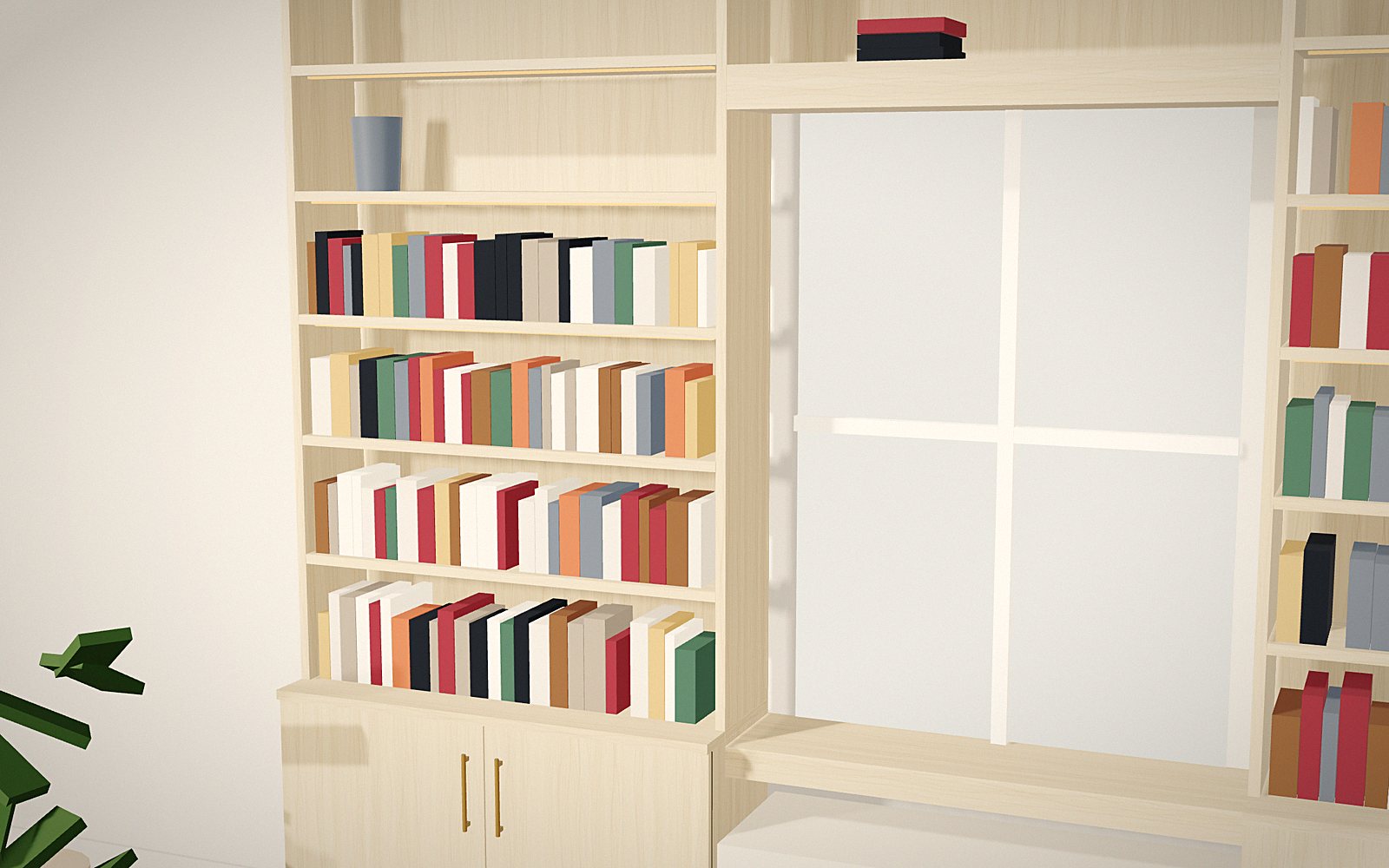
01Shelf depth and spacing
Most hardcovers fit 10 to 12 inches of depth. Art books, records and folios want 14 inches. Space shelves 11 to 13 inches apart for most books and 14 to 15 inches for oversized ones. Adjustable shelves on concealed pins let the spacing change as the collection does.
02Spans that won't sag
A full shelf of books is heavy. Keep loaded shelf spans to about 30 to 36 inches between uprights, or stiffen longer shelves with a solid front edge. That's why a 12-foot wall becomes four or five bays, not two.
03Common dimensions
| Element | Typical | Notes |
|---|---|---|
| Shelf depth | 10 — 12 in | 14 in for art books, records |
| Shelf spacing | 11 — 13 in | 14 — 15 in oversized |
| Bay width | 30 — 36 in | Keeps loaded shelves flat |
| Base cabinets | 30 in high | Usually 4 in deeper than shelves |
| Ladder rail | 9 ft+ ceilings | Rail about 12 in below the crown |
04Closed base or open to the floor
Closed base cabinets with a ledge on top give the wall a furniture-like base, hide what you don't want on show and give you somewhere to set things down. Open shelving to the floor holds more books for less money, and it suits studies and libraries where the whole wall is for reading.
05Windows, fireplaces and doors
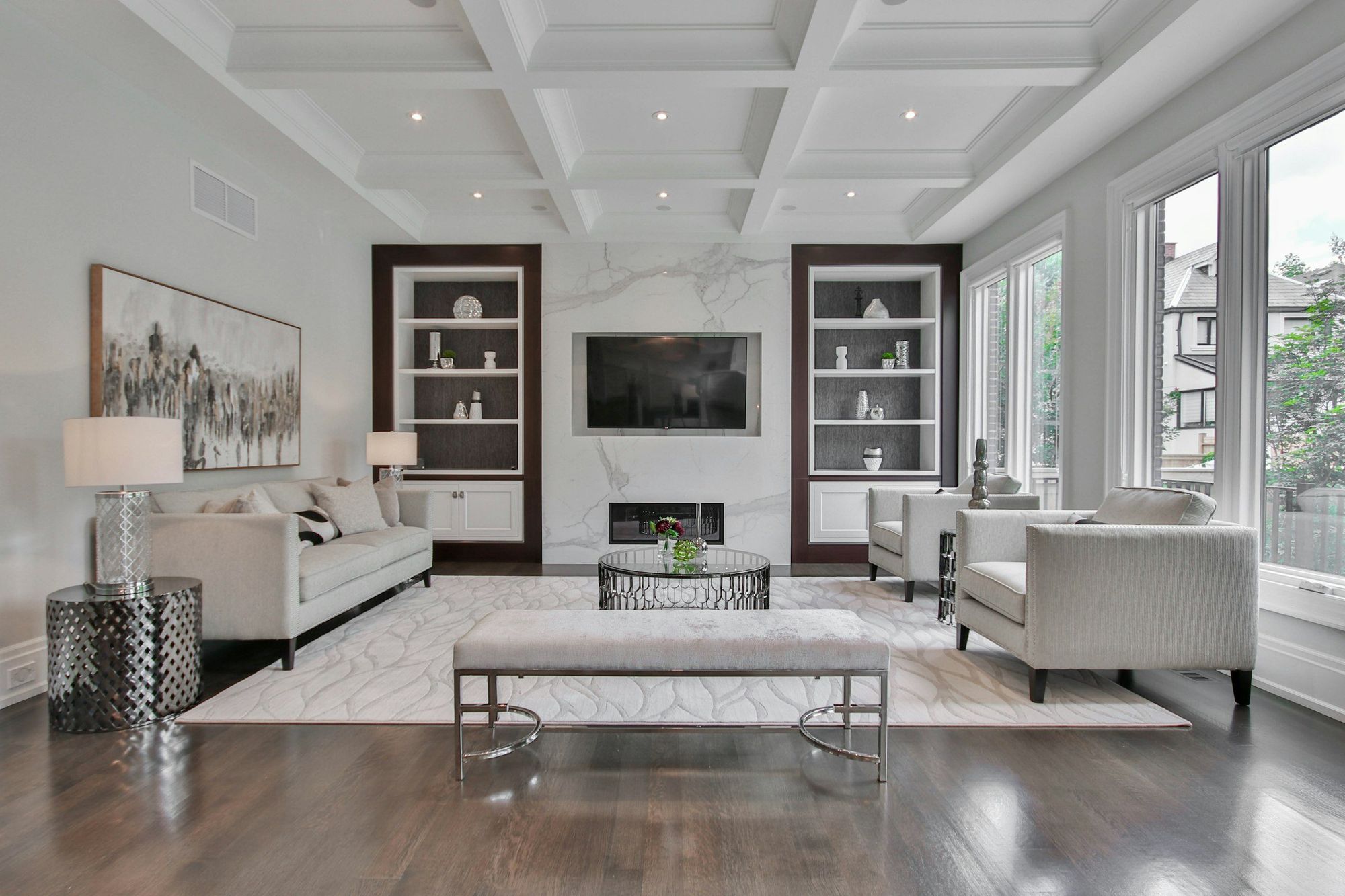
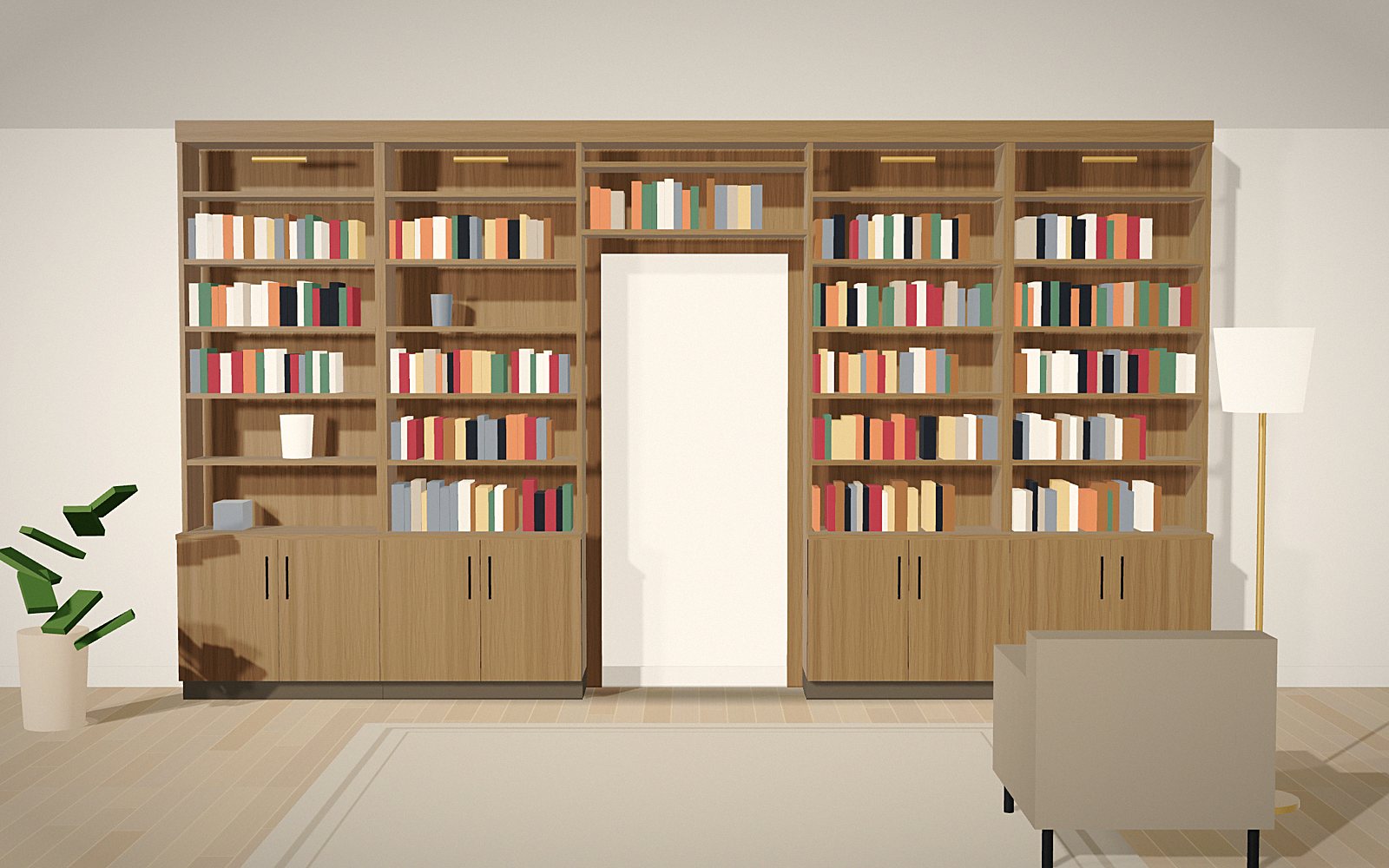
Building around an opening makes the shelving look as if it belongs to the room. Around a window, the shelving returns to the casing and bridges over the top, often with a window seat below. Around a fireplace, it frames a stone surround and a mantel, with a paneled overmantel above. Around a doorway, it returns to the casing and runs over the head, which turns a passage into a library.
06Ladders and desks
A rolling ladder on a rail makes sense from about 9 feet of ceiling up. Below that, a step stool does the job. The rail runs the full width about a foot below the crown. A desk bay replaces one bay of shelving with a work surface and a task light. It's a good way to fit a study into a living room wall.
07Lighting
LED under each shelf lights the spines evenly and makes the wall glow at night. Picture lights over each bay are simpler and more traditional. Either way, choose a warm, dimmable light. Wiring is far easier to plan before the shelves are drawn, even if the lights come later.
08Mistakes to avoid
- Bays wider than 36 inches with no stiffened shelves.
- Shelves so deep that books disappear to the back.
- A ladder rail on an 8-foot ceiling.
- Covering a radiator with no venting or access.
- Lighting added after the fact, with wires running down the uprights.
09Common questions
How deep should built-in bookshelves be?
Ten to 12 inches suits most books. Use 14 inches for art books and records.
How far apart should shelves be?
Eleven to 13 inches for most books, and 14 to 15 inches for oversized volumes.
How wide can a bookshelf be before it sags?
About 30 to 36 inches when it's fully loaded, unless the shelf has a stiffened front edge.
Do I need a ceiling of a certain height for a library ladder?
A rail ladder makes sense from about 9 feet up. Below that, a step stool is more practical.