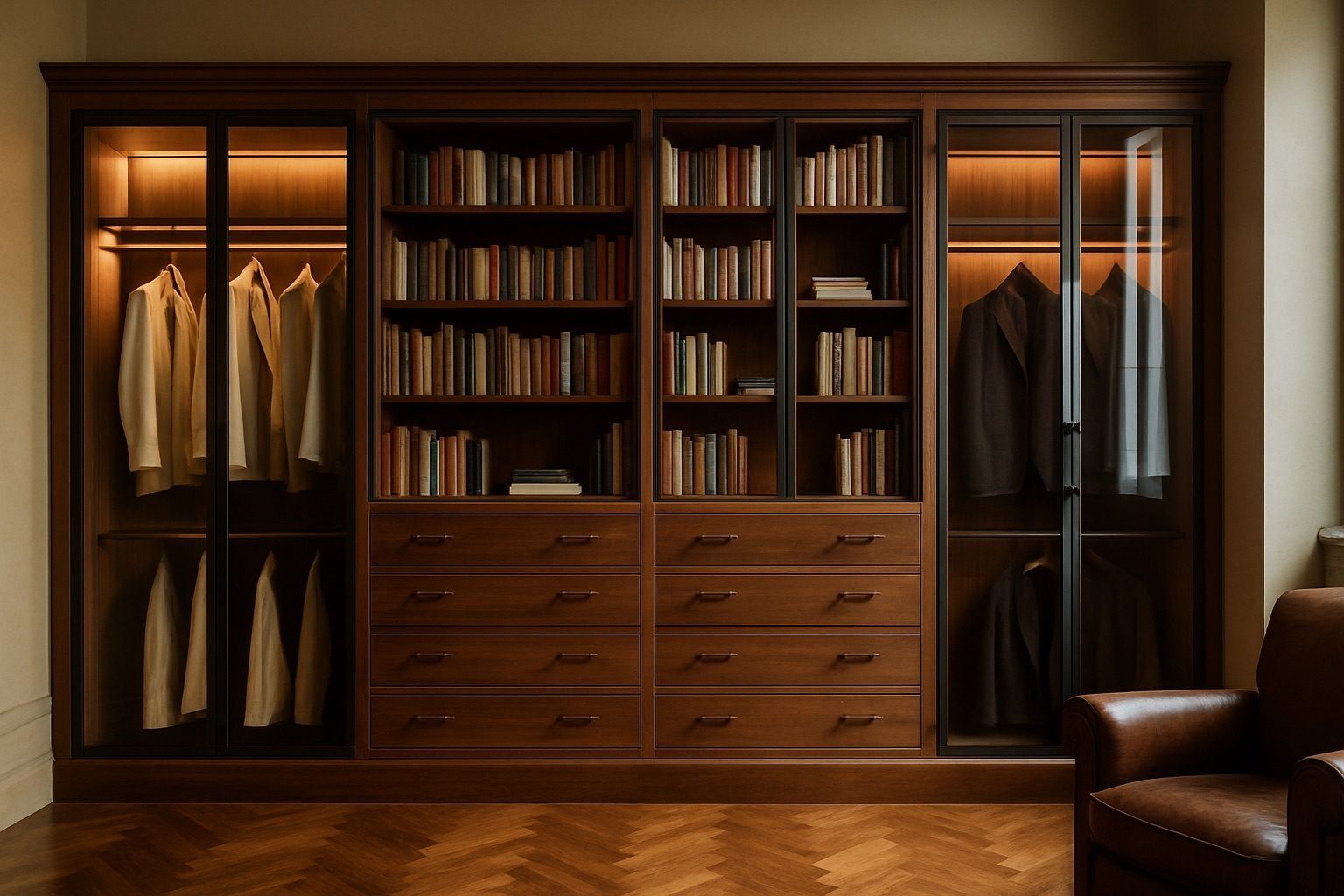
Built-in bookshelves look simple, but a few inches either way decide whether they look full and intentional or half-empty and sagging. Here are the numbers we work from when we design a library wall.
01Shelf depth by what you store
- Paperbacks: about 8 inches deep is plenty. - Most hardcovers: 10 to 12 inches covers nearly everything on a typical shelf. - Art books and coffee-table books: 14 to 16 inches. - Vinyl records: about 13 to 14 inches, since a record sleeve is just over 12 inches square.
For a mixed library, 12 inches is the sweet spot. Books sit near the front edge, spines line up, and the shelf does not look shallow when it holds objects instead of books.
02Shelf spacing
Most hardcovers fit with 11 to 13 inches between shelves. Oversized books need 15 inches or more. We usually make most shelves adjustable and fix one or two for strength, so the spacing can change as your collection does.
03How far a shelf can span
Sagging shelves are the most common complaint about bookcases. A full shelf of books is heavy, and a standard ¾-inch shelf should span no more than about 30 to 36 inches between supports. For longer spans we use a thicker shelf, a hardwood front edge that stiffens it, or a hidden steel support. Sag shows up slowly, so it is worth designing out from the start.
04Deeper at the bottom
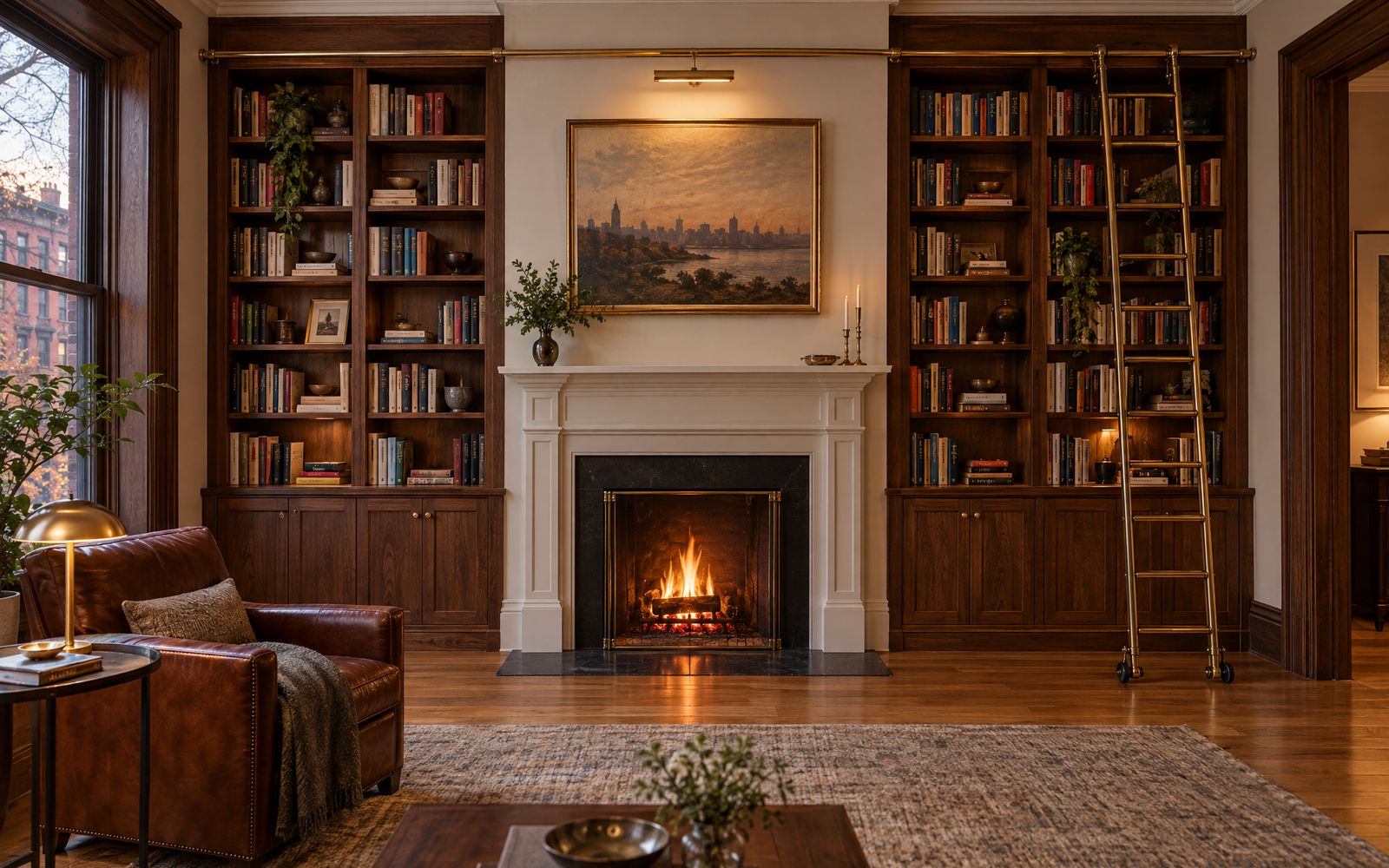
Many of our library walls use lower cabinets 15 to 20 inches deep with open shelves above. The cabinets hide files, games and the things that never look good on display, and the step in depth gives the wall a ledge for lamps and objects.
05Plan for light and wiring
Integrated shelf lighting, picture lights and outlets inside the cabinets all need wiring routed before the wall is built. The same goes for a TV, speakers or a desk section. Deciding early keeps the wires invisible.
06Design yours
Set your wall size and shelf layout in the Library Worx designer, read the design guide for more dimensions, or book a free design visit and we will measure your room.