
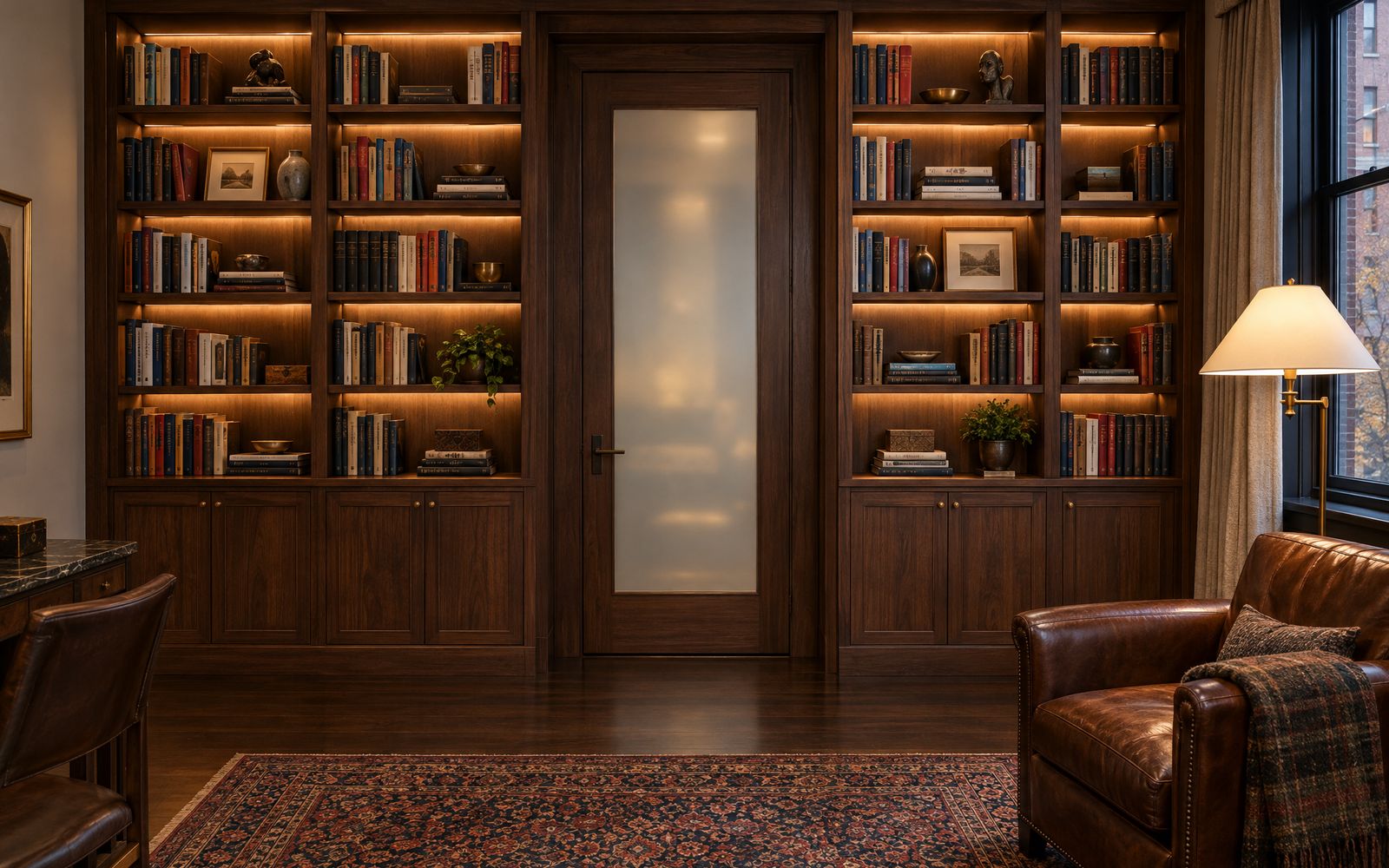
A rolling ladder is the detail that turns a bookcase into a library. In New York apartments with tall prewar ceilings, it is also the most practical way to use the top shelves every day instead of once a year.
01When a ladder makes sense
A ladder earns its place once shelves go above about 7 to 8 feet. Below that, a step stool does the job. With 9-foot ceilings and higher, a ladder lets the top band of shelves hold books you actually read rather than things you never touch.
02How a rolling ladder works
The ladder hangs from a rail mounted near the top of the bookcase and rolls along it on wheels or glides at the floor. Good systems let the ladder slide to the side and sit nearly flat against the shelves when not in use, so it does not block the room.
03Space it needs
- Out from the shelves: at its working angle, the base of the ladder sits roughly 2 to 3 feet out from the bookcase, so leave a clear path along the wall. - Run length: the rail needs to run the full width you want to reach, plus room at the ends to park the ladder. - Floors: rubber wheels or felt glides protect wood floors; the floor should be fairly level along the run.
04Plan it into the bookcase
The rail mounts to the bookcase itself, so the face frame and top need to be strong enough to carry a person's weight. That is easy to build in and difficult to add later. We design the rail height, the shelf face and the ladder angle together on the shop drawing.
05Finishes and hardware
Most clients match the ladder wood to the bookcase, such as walnut on walnut or oak on oak, and choose rail hardware in brass, bronze or black to suit the room. A contrasting painted ladder on a wood wall, or a wood ladder on a painted wall, also works well.
06Design your library wall
Try a ladder layout in the Library Worx designer, see the gallery for ideas, or book a free design visit so we can check your ceiling height and floor.